
How to File Income Tax Return if You Earn Under ₹5 Lakh
If you earn a salary in India and your annual income is above ₹2.5 lakh, you are required to file an Income Tax Return — even if you ultimately owe zero tax. Many workers skip this step because they think 'I don't earn enough to pay tax, so why bother?' But that reasoning can actually hurt you later when you apply for a home loan, a visa, or even a credit card. This guide walks through the complete process for salaried employees earning under ₹5 lakh, where filing is simple and the whole thing can be done in under an hour.

Do You Actually Need to File
The basic rule: if your gross income exceeds ₹2.5 lakh per year (₹3 lakh for senior citizens above 60), you must file an ITR. This applies even if your tax liability after all deductions and rebates is zero. If your employer deducted TDS from your salary, you also need to file — and you may actually get a refund if they deducted more than necessary. Section 87A of the Income Tax Act gives a full rebate to anyone whose taxable income is ₹5 lakh or below, effectively making your tax liability zero. But 'rebate makes tax zero' and 'no need to file' are two different things — the first is true, the second is not.
Which ITR Form to Use
For most salaried workers earning under ₹50 lakh, the correct form is ITR-1, also called Sahaj. You can use ITR-1 if your income comes from salary, up to two house properties, and other sources like bank interest or fixed deposits. ITR-1 is NOT for you if any of these apply: you have business or freelance income, your capital gains exceed ₹1.25 lakh, you hold foreign assets, or you are a director in any company. If any of those apply you will need ITR-2 or ITR-3, but for a typical factory worker, driver, office employee or retail staff member — ITR-1 is the right one.
Step-by-Step Filing Process
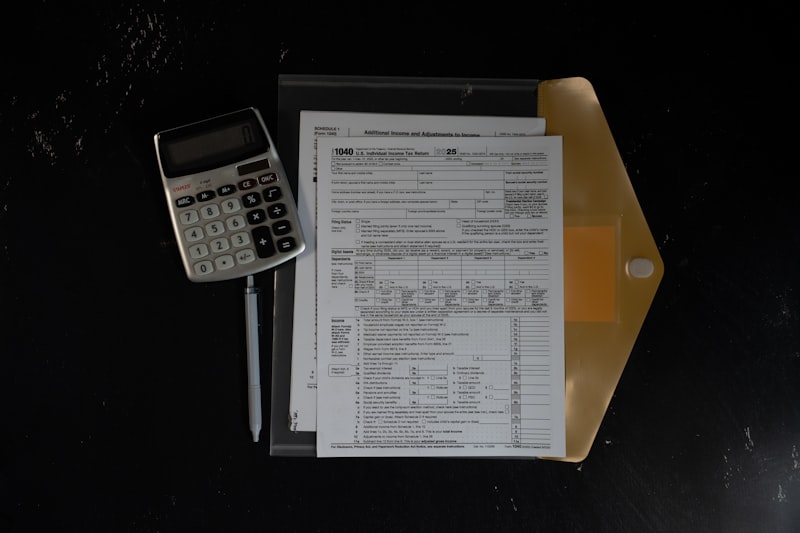
- Step 1: Get your Form 16 from your employer — this document shows your total salary, allowances, and TDS deducted. Employers must give it by June 15.
- Step 2: Go to incometax.gov.in and login with your PAN number. If it is your first time, register using your PAN and set a password.
- Step 3: Go to 'e-File' then 'Income Tax Returns' then 'File Income Tax Return.' Select the assessment year (for income earned in 2024-25, select AY 2025-26) and choose ITR-1.
- Step 4: The form will be pre-filled with data from your Form 16 and AIS (Annual Information Statement). Verify all numbers carefully — salary, interest income, TDS deducted. Correct anything that looks wrong.
- Step 5: Check the tax calculation section — if your taxable income is under ₹5 lakh, it should show zero tax payable after the 87A rebate.
- Step 6: E-verify using Aadhaar OTP — this is the fastest method. A one-time password is sent to the mobile number linked with your Aadhaar.
- Step 7: Save the acknowledgment number (ITR-V). You can download the acknowledgment PDF from the portal.
Deadline and Late Filing Penalty
The normal deadline to file ITR is July 31 each year. For assessment year 2025-26 (income earned April 2024 to March 2025), the government extended the deadline to September 15, 2025. If you miss the deadline you can still file a belated return — but there is a penalty. For income under ₹5 lakh, the late fee is ₹1,000. For income above ₹5 lakh it jumps to ₹5,000. The late fee is small, but filing on time avoids it and also ensures your return is processed faster.
Why File Even If Tax Is Zero
This is the part most people do not realize until they actually need it. Banks ask for 2-3 years of ITR when processing home loan applications — it is how they verify your income history. Visa applications for many countries including the US, UK, and Schengen area routinely require ITR copies as proof of financial standing. If your employer over-deducted TDS from your salary, only filing ITR lets you claim that refund — otherwise the government keeps it. And an ITR is a government-verified income proof that carries more weight than a salary slip alone in many financial transactions.
A Few Things That Trip People Up
PAN and Aadhaar must be linked before you can e-verify — if they are not linked, do it first at the income tax portal, it takes 5 minutes. Check your Annual Information Statement (AIS) on the portal before filing — it shows what banks, employers, and others have reported under your PAN, and sometimes there are entries you were not aware of. If you have a fixed deposit or savings account interest above ₹10,000 in a year, that needs to be declared as 'income from other sources' even if no TDS was cut. It wont create a tax liability for most people under ₹5 lakh, but skipping it is technically incomplete filing. The whole process sounds complicated the first time but once you have done it once, refiling next year takes maybe 20 minutes because most data comes pre-filled.